Table Of Content

Speed 2 falls far short of its predecessor, thanks to laughable dialogue, thin characterization, unsurprisingly familiar plot devices, and action sequences that fail to generate any excitement. Annie and Dante, the ship's photographer, notice the people trapped behind the fire doors, and use a chainsaw to cut the door open and bail them out on the other side of the hallway. Meanwhile, Alex orders the navigator, Merced, to flood the ship and slow it down by opening the ballast doors.
– Watch the road and steer
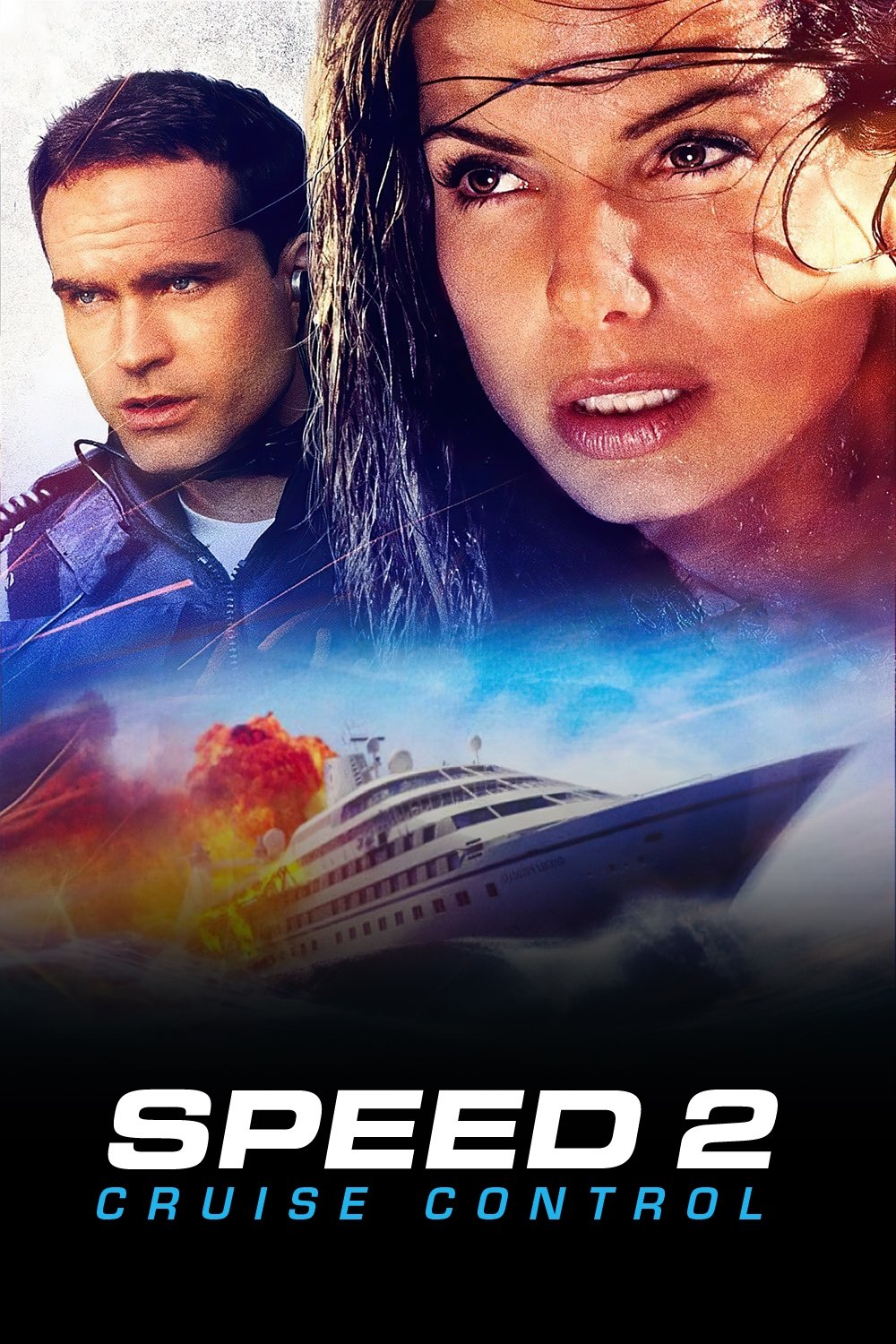
(The dialogue explains that she split up with the Keanu Reeves character from the earlier film for a lot of reasons, one of them possibly being that he did not want to appear in the sequel). They go on a cruise, and are unlucky enough to pick the boat targeted for revenge by a villain named Geiger (Willem Dafoe), whose laptop computers can take over the ship's own systems and control them. One potential downside to using cruise control is that it can result in the driver having a reduced reaction time when they must respond quickly to an unexpected situation on the road. Motorbiscuit reminds drivers that cruise control is not a hands-free driving feature.
Film Credits
The system will slow you down and speed you up as the flow of traffic fluctuates throughout your commute, removing a lot of the stress from daily driving. However, adaptive cruise control may not work well in bad weather or protect you from sudden movements, so you will want to always keep your full attention on the road. The cruise control systems of some vehicles incorporate a "speed limiter" function, which will not allow the vehicle to accelerate beyond a preset maximum; this can usually be overridden by fully depressing the accelerator pedal. Most systems will prevent the vehicle from increasing engine speed to accelerate beyond the chosen speed. However, they will not apply the brakes in the event of overspeeding downhill, nor stop the car from going faster than the selected speed even with the engine just idling. The cruise control takes its speed signal from a rotating driveshaft, speedometer cable, wheel speed sensor from the engine's RPM, or internal speed pulses produced electronically by the vehicle.
Filming
Movies like this embrace goofiness with an almost sensual pleasure. Once familiar with your car’s cruise control system, you can try it out. Wait for a moment when it’s appropriate to use cruise control before turning it on. Check that the road is clear, that weather conditions are good, and that you’re on a highway or a road where you won’t have to stop or change speed often. If conditions are right to use cruise control in your car, turn on the system.
Full Cast & Crew
De Bont had the idea for the film after he had a recurring nightmare about a cruise ship crashing into an island. Speed star Keanu Reeves was initially supposed to reprise his role as Jack Traven for the sequel, but decided not to commit and was replaced by Patric before filming. The writers had to rework the script to accommodate the addition of a new character.
How to set cruise control
The Amount of Money Keanu Reeves Refused for Speed 2 is Absolutely Stupendous - FandomWire
The Amount of Money Keanu Reeves Refused for Speed 2 is Absolutely Stupendous.
Posted: Mon, 04 Dec 2023 08:00:00 GMT [source]
Distracted driving is a bad driving habit that can lead to crashes, so always stay alert. Adaptive cruise control (ACC) is the latest type of cruise control that’s becoming widely available in cars. ACC maintains your speed but incorporates sensors to measure the distance to the car ahead. Once you set a distance, the ACC adjusts your speed to ensure you stay at that distance — usually a car length or two. While cruise control is a convenient feature for modern drivers, it is not perfect for all circumstances. In fact, utilizing the system can be quite dangerous if you’re not careful.
Set distance for ACC systems
To use cruise control, you can typically press buttons on your steering wheel to activate the system, set your speed, adjust your speed up or down within the system, and deactivate the system. Using cruise control lets you set a speed for your car to maintain even if you take your foot off the gas. Cruise control can also prevent speeding and increase fuel efficiency by limiting unnecessary acceleration and braking. The cruise control utilizes the vehicle speed sensor mounted on the transmission to monitor your vehicle’s actual speed and adjusts its output based on that information. The vehicle speed sensor actively reads the transmission’s revolutions in real time to determine vehicle speed. If the cruise control speed sensor reads incorrectly, intermittently, or not at all, the cruise control will not operate in the proper manner.
Cruise control works best on a clear day with constant traffic flow. Cruise control has come a long way since first invented and patented by Ralph Teetor in 1950, who originally named it the “Speedostat”. Chrysler Corporation was the first manufacturer to offer the groundbreaking mechanism as an option on several of its luxury vehicle models nine years later. Today, cruise control is rapidly becoming the standard on all new vehicles, providing drivers with increased convenience on their daily drive. Another inventor named Harold Exline, working independently of Riley, also invented a type of cruise control that he first installed on his car and friends' cars. I will observe, however, that it's not every day (unless you live in New Orleans) that you get to see a ship crashing into a pier.
Those systems were prone to failure if the cable came loose or slipped, or if it got snagged on another component nearby under the hood. Cruise control is best suited for long drives on large, straight roads such as an interstate highway with cars traveling at a relatively constant speed. It’s inappropriate in stop-and-go traffic; when weather conditions are snowy, icy, or even heavy rain; on narrow, curvy roads; or with frequent speed limit variations.
Cruise control is a feature on some vehicles that allows the driver to take their foot off the accelerator while the onboard computer maintains the vehicle’s speed. Within cruise control, you can typically also adjust your speed up and down using buttons. This step will vary widely based on your vehicle make and model, however, many cruise control settings are accessible from the steering wheel controls.
Cruise control is an electronic device within your vehicle that controls the speed of your vehicle. It allows the driver to maintain a constant speed of 25 mph without holding their foot on the accelerator. Although the feature has been around for 70 years, automotive manufacturers continue to improve upon the technology to provide drivers with increased comfort, luxury, and convenience whenever they’re behind the wheel.
Luxury automakers such as Tesla and Audi are implementing the newest rendition of cruise control on their latest vehicle models – Semi-autonomous Cruise Control. It works largely the same as adaptive cruise control, but assists drivers with lane guidance and steering. There are several variations of semi-autonomous cruise control that include additional convenience features for the driver.
She finds out that Alex is on the SWAT team after he lied and told her that he was a beach officer. As an apology, Alex surprises her with a Caribbean cruise on Seabourn Legend.




No comments:
Post a Comment